
Explore the latest trends shaping web development, from AI integration to progressive web apps and everything in between.
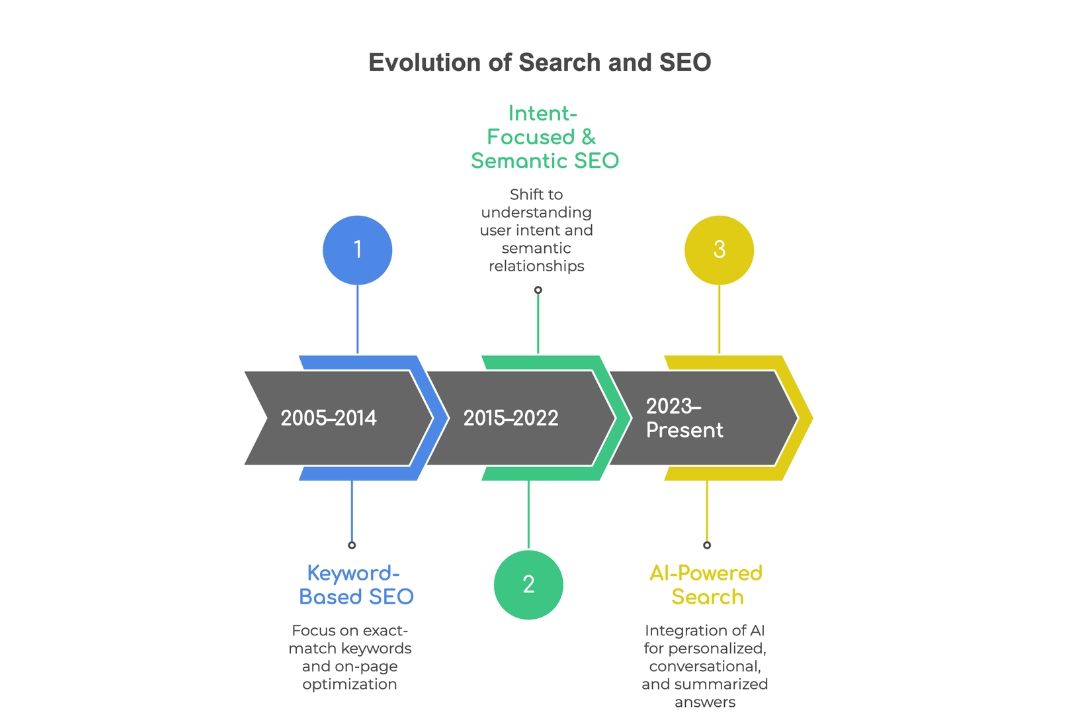
Search has evolved from focusing on keyword density and backlinks to prioritising intent, entities, and AI-driven understanding in AI-powered search. Artificial intelligence now determines how results are generated, displayed, and consumed.
If your website traffic is changing despite stable rankings, AI may be the cause. Google's Search Generative Experience, AI-powered snippets, and large language models are reshaping visibility. Adapting to these changes presents both challenges and opportunities for website owners.
This guide explains how AI-powered search works, the main changes in SERPs, and practical steps to keep your site visible. You'll learn how AI interprets content, what's different in results, and how to optimise for AI snippets and semantic search. It's useful for both website owners and digital consultants who want to stay ahead.
AI-powered search represents a fundamental change in how search engines process queries and deliver results. Rather than matching keywords to pages, modern systems use large language models to understand semantic meaning and generate comprehensive answers.
Google AI Overview: Google now interprets content more like a human, recognising entities such as people, places, concepts, and organisations. It identifies topic relationships and evaluates whether content meets user intent. Incorporate author bio schema, cited studies, and content update dates to demonstrate EEAT and signal credibility and freshness.
Semantic Search & Entity Understanding: A query like "best running shoes for marathon training" is treated as a specific intent, connecting entities such as pronation, cushioning, and training distance. Google goes beyond keywords to understand what the searcher really needs.
Featured Answers & AI Snippets: Google's AI synthesises information from multiple sources, evaluates EEAT, and provides concise answers. Well-structured and helpful content can be featured in AI snippets, even if it is not the top-ranking link.
Topical Authority: AI evaluates your entire site. Comprehensive coverage of a topic demonstrates expertise and increases the likelihood that your content will appear in AI-generated snippets.
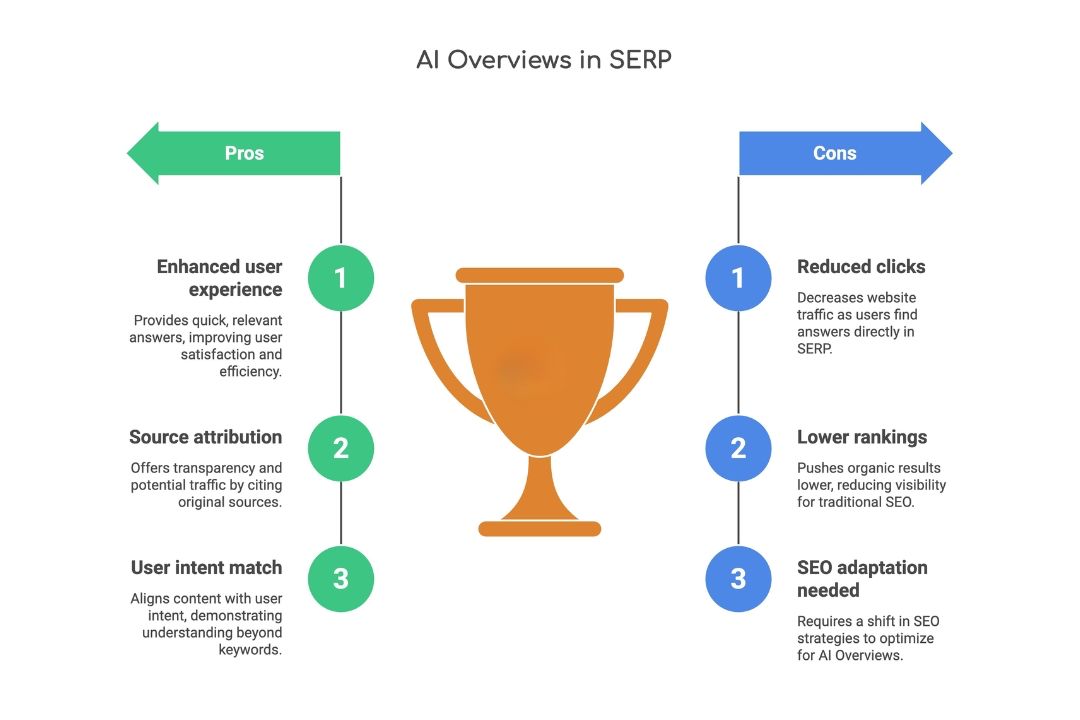
The search results page has changed. Website owners should be aware of the following developments:
Generative AI Snippets: AI now generates concise answers with cited sources. If your content is referenced, you can gain visibility even without holding the top ranking.
Zero-Click Searches: Featured snippets, People Also Ask, and knowledge graphs now answer queries directly on the results page. Even without clicks, appearing in these elements increases brand visibility. AI summaries may use content from any section of your page, making all content potential snippet material.
Voice Search Integration: Voice assistants depend on AI-generated results. Create structured, conversational content that sounds natural when spoken.
Intent over Keywords: AI recognises synonyms, related concepts, and natural language. For example, a search for "car repair tips" may display "automobile maintenance" content if the intent aligns. Prioritising intent over exact phrases is essential.
Traditional SEO tactics are becoming less effective in an AI-driven environment:
Keyword Stuffing vs. Intent Alignment: AI evaluates semantic coherence instead of keyword density. Content must directly address user needs.
Long Generic Content vs. Concise, Actionable Content: A lengthy article with unnecessary content is less effective than a shorter piece that provides clear answers.
Backlinks Are Less Dominant: While backlinks remain important for authority, AI snippet visibility depends more on content quality, semantic relevance, and entity recognition.
Crawling vs. AI Understanding: Implementing semantic markup, schema, and clear structure enables AI to better interpret your content.
To remain competitive, adopt new methods to create, organise, and optimise your content for AI.
Understand user intent for every query. Use semantic clusters to comprehensively cover topics. For example, a coffee website should address brewing methods, equipment reviews, bean selection, and maintenance guides. Include FAQs that answer common questions directly, making it easier for AI to use them as snippets.
Implement schema markup for articles, products, FAQs, HowTos, and local businesses. Structured data enables AI to identify key topics and assess whether your content qualifies for rich results.
Put clear answers at the start of each section. Use lists, tables, and bullet points to make your content easier for AI to extract. Write headings as questions to help AI identify and utilise your content.
Small, focused content units, such as 300-word posts or quick-answer FAQs, are more likely to earn AI snippet placement. Link short content to longer articles to demonstrate comprehensive topic coverage.
Use Search Console and SERP tools such as Semrush, Ahrefs, and SISTRIX to track when your content appears as an AI snippet and to monitor its impact on your click-through rate. Analyse how competitors earn AI snippets and identify opportunities where your content can address gaps. Track metrics such as impressions, entity mentions, and snippet appearances in addition to your rankings.
Key trends shaping 2026 and beyond:
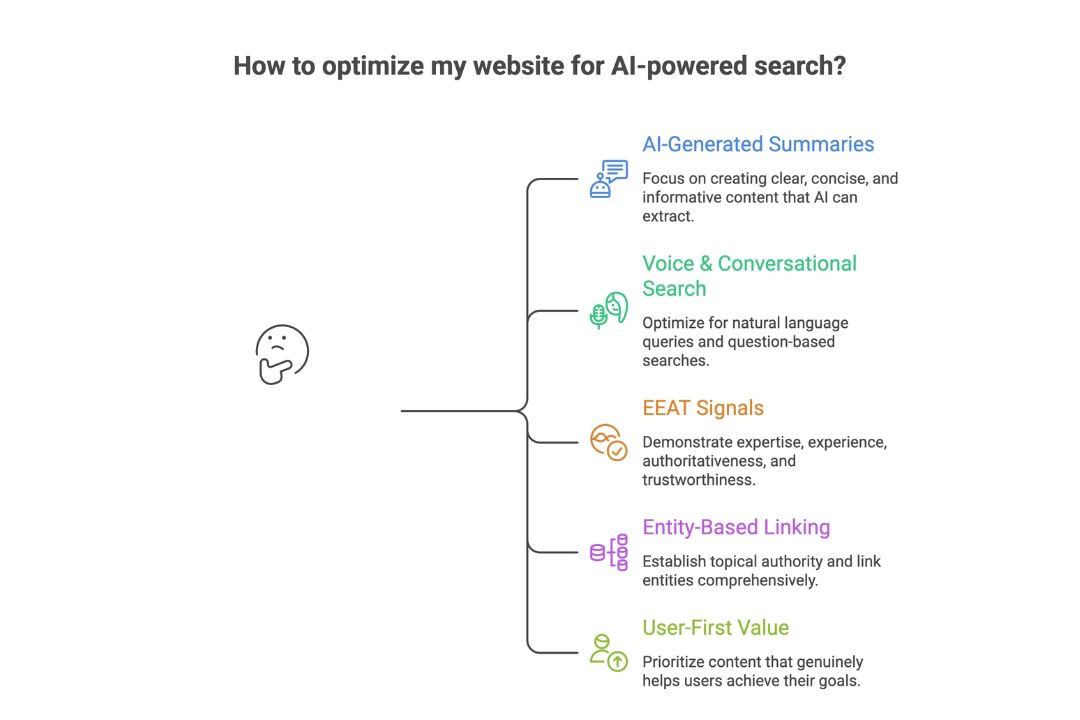
AI-Generated Summaries Replace Meta Descriptions: Focus on explicit content throughout, as AI may create snippets from any part of your page.
Voice & Conversational Search: Optimise content for natural language queries and question-based headings.
EEAT Signals Matter More Than Ever: Author credentials, credible sources, and regular content updates differentiate your content.
Entity-Based Linking & Topical Authority: Comprehensive coverage across related concepts signals AI that your site is a trustworthy source.
Sites that prioritise user value, real expertise, and structured content will perform best in AI-powered search. Treat AI as a channel to deliver value, not just a threat. As a first step, choose one key page, improve its structured data, tighten intent-focused content, and format it for snippets. Then monitor AI snippets and visibility to refine your strategy.
The opportunity is in understanding how AI interprets content and aligning your strategy to maximise visibility and user value.